[–>
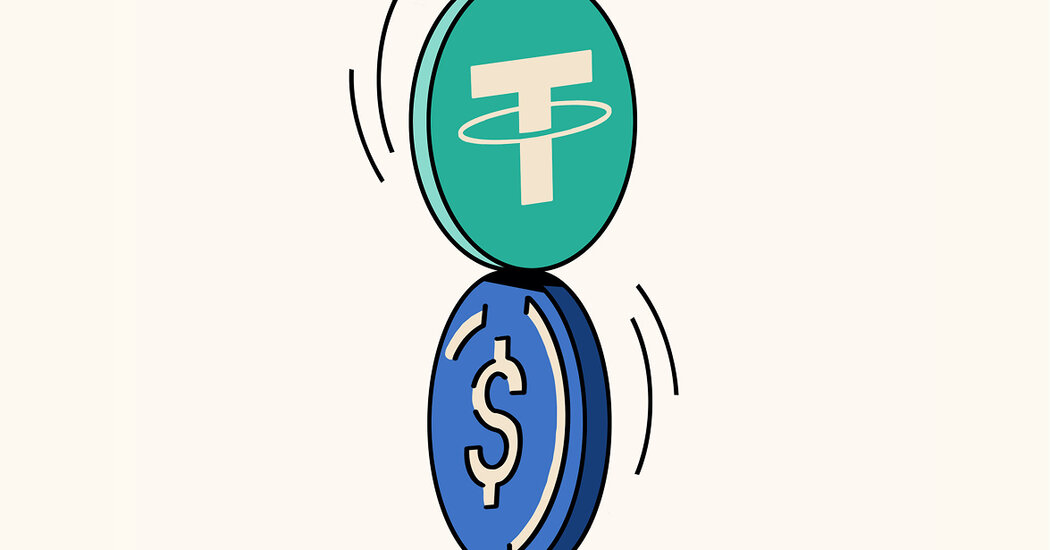
There’s a new type of money spreading rapidly across the internet, propelled by the crypto boom. It’s supposed to be worth a dollar, but it’s not issued by any government. Called a stablecoin, it is a digital currency that is subject to very little legal oversight — and its growing popularity has recently transformed it into a $300 billion market.
You can use stablecoins to buy things online, make investments or send money abroad with minimal fees.
Hundreds of different brands of stablecoins exist now, with more to come. The Trump family introduced its own version this year. Walmart has been exploring one, as have major banks, tech companies and others.
And as big businesses flock to the cryptocurrency, so have bad actors. When pushing for stablecoin legislation in March, Senator Bill Hagerty, Republican of Tennessee, said the United States could not ignore the use of these digital dollars for “illicit activities by drug cartels, foreign terrorist organizations and state actors.”
[–>
Financial experts worry that the increasing adoption of these cryptocurrencies could pose large risks to the financial system. You can use them to easily move official money into digital currencies and back again. But they do not come with deposit insurance, like money in a savings account from a bank will have. There are no fraud protections. And there is scant regulation in place to make sure people are not using them for illegal transactions.
Stablecoin companies “enjoy the privileges of being a bank without the responsibilities,” said Corey Frayer, a former official at the Securities and Exchange Commission focused on crypto policy and a director at the Consumer Federation of America, a consumer advocacy group.
The mechanics of how stablecoins work are straightforward. You can buy them, usually from a large online crypto exchange, in a matter of minutes with a wire transfer or credit card. The coins sit in your digital wallet, available for cheap and fast transactions anywhere in the world.
Imagine you want to buy this pair of Nike Air Force 1 shoes. They cost $222 from Crepslocker, a British online reseller of luxury goods.
Here’s what happens at checkout:
Mani Fazeli, the vice president of product at Shopify, said that since cryptocurrency regulations were still evolving, consumer protections can differ from traditional card payments. He added that the company worked with regulated partners to handle compliance for different parts of the process for payments.
Until recently, stablecoins served two main purposes: buying other cryptocurrencies and making risky crypto bets. But new regulations, including the GENIUS Act that President Trump signed into law this year, legitimized them for traditional payments and banking.
As it becomes more mainstream, many people may not even know they’re using stablecoins for transactions, said John Collison, a founder of Stripe, a payments company.
[–>
He cited Félix Pago, a popular app that allows people to send money transfers through WhatsApp and other platforms. Using Stripe technology, Félix Pago converts money into stablecoins to cut out foreign exchange fees, but doesn’t advertise cryptocurrency anywhere on its website.
“For me, this is a sign of the maturity of the industry and the utility of the technology,” Mr. Collison said in an interview.
The lack of transparency worries Mr. Frayer. He predicts that payment companies will slip stablecoins into updated terms of service, so consumers unknowingly agree to crypto transactions every time they swipe their card. But those transactions “will come with none of the protections” that Americans expect, like chargebacks and fraud protection, he said.
Mr. Frayer warns that the proliferation of the coins echoes a dangerous era in American finance. In the 19th century, before federal regulations, private banks issued their own currencies that frequently collapsed, wiping out people’s savings.
Here’s how stablecoins in your crypto wallet differ from a traditional bank deposit:
[–>
A niche invention that grew bigger than nations’ G.D.P.s
[–>
Five years ago, stablecoins were mostly niche assets for crypto traders. Today, they’re worth more than the yearly economic output of Greece.
Tether, one of the most well-known issuers of stablecoins, made $13 billion in profit last year, according to company disclosures, just from the interest on customer funds. It now has roughly $180 billion in circulation. Circle, which issues the stablecoin USDC, has about $78 billion.
The Rise of Tether and Circle
[!–>
To understand why that matters, you need to understand Treasury bills, or T-bills.
T-bills are essentially short term loans taken by the U.S. government to fund its operations, accounting for 20 percent of all U.S. debt. They’re considered some of the safest investments in the world because the United States is very unlikely to default on its debt, especially over shorter time periods. So banks, pension funds, foreign governments and money market funds all heavily invest in this market as a way to safely park enormous amounts of cash while earning a return.
Now, stablecoin issuers are some of the biggest purchasers of Treasury bills. Circle and Tether together hold roughly $136 billion in T-bills, according to an analysis of their financial statements, putting them on par with large nations and institutional investors.
Top Purchases of Treasury Bills in 2024
[!–>
With the passage of the GENIUS Act, the Trump administration’s signature crypto policy, the adoption of stablecoins is projected to skyrocket.
The Federal Reserve estimates that the total market could be worth $3 trillion in five years. That’s nearly the entire 2024 gross domestic product of France, according to the World Bank.
Industry giants are celebrating. “We love, we love the GENIUS Act,” said Rubail Birwadker, the global head of growth at Visa, which has expanded into stablecoin payments. He added that the new regulation “makes it so much easier for more legitimate banks, technology companies, others to actually enter the ecosystem because they know exactly what they’re getting into.”
Mr. Frayer, the Consumer Federation of America director, said the law fell far short of existing regulations for financial firms. It hands financial power to companies, he argued, that “fundamentally don’t believe that the federal government has any role in regulating financial transactions.”
[–>
A coin that provides all of the power, with none of the oversight.
[–>
Because stablecoins exist in a regulatory gray zone, Tether has become a favorite currency of criminals and money launderers.
ISIS has used it to fund operations, according to the U.S. Financial Crimes Enforcement Network.
Russian oligarchs moved millions of dollars in Tether across borders to evade sanctions in Europe, the Treasury Department said.
On Telegram, underground channels openly advertise weapons and narcotics, accepting Tether payments while promoting “zero fees” and untraceable transactions.
In a statement, a Tether spokesperson said the company worked closely with law enforcement agencies and that it regularly froze assets of bad actors. “Blockchain transactions are traceable in ways that cash and traditional banking channels are not,” the company said. “Criminals predominantly use cash along with every form of money, but digital assets create immutable records that law enforcement can trace.”
[–>
The risks of stablecoins extend beyond criminal use. Because they have connected crypto markets directly to traditional finance, failures in either system can spread to the other.
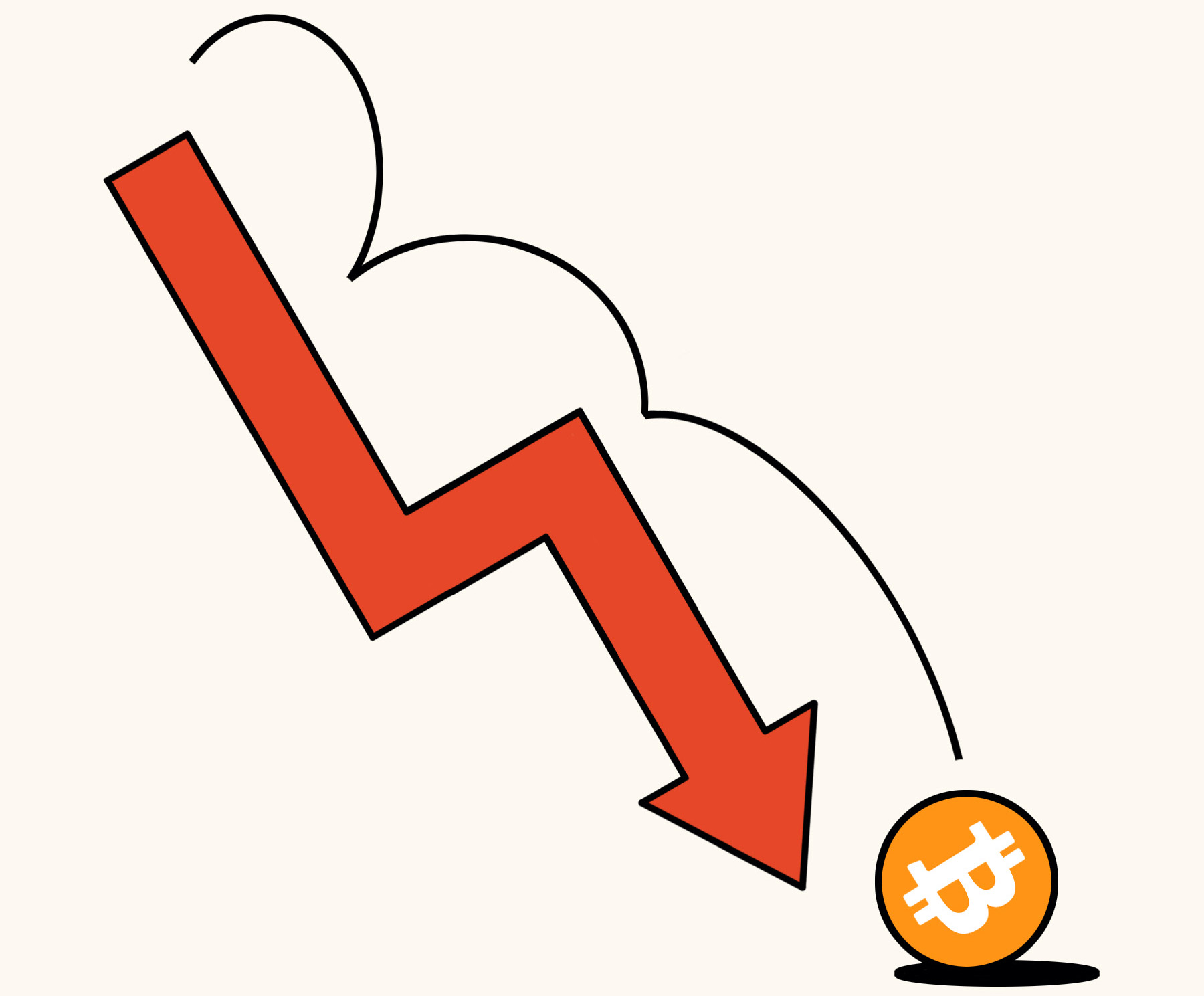
When the price of Bitcoin slid recently, people used stablecoins to cash out, according to data from CoinMarketCap, an industry firm. The overall value of the number of Circle stablecoins decreased nearly 3 percent over a 13-day period.
The sell off was relatively slow, happening over the course of nearly two weeks. But had withdrawals happened more rapidly, it could have meant something much more damaging. Here’s how that could have played out.
Значення криптовалюта збої, штовхаючи інвесторів у стейблкойни, частково щоб допомогти їм отримати готівку зі своїх інвестицій.

Оскільки криптовалюта продовжує падати, стейблкойн компанії починають продавати казначейські векселі, щоб розплатитися з клієнтами.

ДКО, в результаті, втрачають свою вартість, позначаючись резерви банків і фондів грошового ринку.
A crash could also work in the other direction, a danger that became clear two years ago.
Банки або фонди грошового ринку падають.
In March 2023, Silicon Valley Bank collapsed.
Гроші, які підкріплюються стейблкойни зникає.
Circle had $3.3 billion trapped in the failed bank, causing its USDC currency to plunge to 87 cents per coin.
Панічні каскади, посилка криптовалюта у вільне падіння.
Crypto exchanges froze withdrawals, margin calls resulted in forced selling and the contagion spread to Bitcoin and Ethereum.
The crisis ended only when federal regulators guaranteed all Silicon Valley Bank deposits. The episode, however, exposed a critical vulnerability: Unlike bank deposits, stablecoin holdings have no federal safety net, so customers are at risk if the issuer falters. Had Circle lost its $3.3 billion, many everyday users would simply have been out of luck.
The risk isn’t just hypothetical. Stablecoin issuers have a checkered record when it comes to managing customer funds, according to Hilary Allen, a professor at American University.
In 2021, for example, Tether reached a settlement with the New York attorney general after investigators found it had falsely claimed to hold sufficient assets to match the amount of Tether in circulation, according to court documents. Had there been a surge in withdrawals, Tether might not have been able to cover all its stablecoin holders.
[–>
On Nov. 26, S&P Global, a ratings firm, downgraded its assessment of Tether’s holdings to “weak,” the firm’s lowest rating, citing “persistent gaps in disclosure” and overreliance on high risk assets like bitcoin, gold and corporate bonds.
In a statement, a Tether spokesperson said its currency “has remained stable through banking crises, exchange failures, and extreme market volatility.” Since the New York attorney general settlement years ago, Tether has increased its holdings of safe assets, the company said.
Tether’s checkered history nonetheless does not inspire confidence, according to Ms. Allen. Any doubt about solvency, she said, could generate a run.